

The emergence and rise of the Bulgarian nation during the Revival era in the last decades of Ottoman rule is inextricably connected with the Greeks. It started as a reaction to the danger of Graecization (Helleniza- tion), the alarm over which was sounded as early as 1762 by the monk Paisiy of Hilendar Monastery. The Bulgarians first learned from the more advanced Greeks, who acted as mediators of modernity in the empire, and then turned against them and developed their own national ideology in a bitter struggle with Greek nationalism (which started earlier). But the latter also evolved under the impact of this rivalry and strife. The resulting dynamics entangled both nations with far-reaching consequences.

"Are Bulgarian and Macedonian different languages?" "Is there a Macedonian language, or is it just a dialect?" "Is it closer to Serbian or to Bulgarian?" "Do you understand one another when everybody speaks his or her native tongue?" When discussing the Macedonian imbroglio with people from other countries, citizens of Bulgaria and of the former Yugoslav republic of Macedonia are often asked such questions. They may seem naive, and some of them are surely improperly formulated. But they are representative of a certain pattern of thinking. In fact, these questions presuppose a certain commonsensical idea of identity, which takes for granted the direct link between linguistic classification, ethnic belonging and nationhood.

Balkan history has followed various courses and taken various shapes at different eras, and the studies that deal with it have attempted to make sense of it in different ways. There are the ubiquitous metaphors of a "crossroads" or "powderkeg" or a "battlefield" of civilizations. Some authors have seen ghosts of ancient hatreds haunting the region; others sought to show that such apparitions were largely imaginary. Some were concerned with drawing the borders of the region and defining its unity and distinctiveness, while others went in pursuit of an evasive human species-Homo balcanicus.
This study deals with scholarly interpretations of a specific vernacular house type that is widespread in the Balkan countries and which has been traditionally labeled either an “Ottoman house” or a “Balkan house.” The focus here is on the construction of national interpretations of the vernacular residential architecture in question, meaning symbolic appropriations or “nationalizations” of a common cultural heritage from the Ottoman era. Although dedicated to a certain form of traditional architecture, this text does not present the outcome of research in the field of art/architectural history or ethnography. Instead, it takes a critical meta-position with regard to these disciplines, which have been crucial in the development of a certain idea of “national heritage” and, in particular, of “national architecture” in the post-Ottoman Balkans. Thus the present work invites a critical rethinking of the national approaches in the broader field of traditional culture and material heritage that still seem so authoritative in the Balkan countries. It also provides a comparative analysis of the development of Balkan theories of vernacular architecture regarding not only their connections to the broader European context but also the mutual influences among them. This work is thus intended to shed light on deeper transformations of the cultural contexts within Balkan countries since the late nineteenth century and on phenomena that have rarely been studied together and in terms of their interactions.
The concept of the Balkans as a separate region is directly related to the designation of a whole range of realia, phenomena, and notions as “Balkan,” such as “Balkan nationalism,” “Balkan languages,” “Balkan cuisine,” and “Balkan habits.” In any such case, one may argue whether and to what extent the respective phenomenon is representative of the Balkans and whether it is typical only of the Balkans. As a case study, I will analyze the appearance and the usage of the concept of the “Balkan city.” Of course, this is one among many possible cases, but it is particularly useful for one reason. Unlike “Balkan music” or “Balkan cinema,” not to mention “Balkan backwardness” or “Balkan mentality,” the problem of cities and urban networks makes it possible to see the spatial dimension of the problem: the objects of study appear distinctly on the geographical map. Thus one could more easily verify whether something called “Balkan” is actually typical for “the Balkans” (or for the “Balkan peninsula”), whether it covers the whole of the region or instead also includes territories outside its conventionally accepted borders. In this way, through the prism of urban history, I will try to examine from a different angle the problem of the spatial scope of the Balkans. Instead of drawing the boundaries of the region (or the “peninsula”) and searching for its specificities, I will start from one such specificity and try to map its territorial distribution.
At first, the Vlachs were reluctant and turned away from the revolt urged upon them by Peter and Asan, looking askance at the magnitude of the undertaking. To overcome the timidity of their compatriots, the brothers built a house of prayer in the name of the Good Martyr Demetrios. In it they gathered many demoniacs of both races; with crossed and bloodshot eyes, hair disheveled, and with precisely all the other symptoms demon- strated by those possessed by demons, they were instructed to say in their ravings that the God of the race of the Bulgars and Vlachs had consented to their freedom and assented that they should shake off after so long a time the yoke from their neck; and in support of this cause, Demetrios, the Martyr for Christ, would abandon the metropolis of Thessaloniki and his church there and the customary haunts of the Romans and come over to them to be their helper and assistant in their forthcoming task.
“[. . .] the Thracian race is the most numerous, except the Indians, in all the world—and if it should come to be ruled over by one man, or to agree together in one, it would be irresistible in fight and the strongest by far of all nations, in my opinion [. . .]” Today, this excerpt from Herodotus is practically obligatory to quote in monographs, articles and even in novels dedicated to the paleo-Balkan peoples known under the common ethnonym Thracians (referred to in Ancient Greek as Thra[i]kes, Thrēikes, etc.). This is especially true in Romania and in Bulgaria, where scholars, writers, journalists and political propagandists have created an immense library of writings dedicated to these ancient populations. These countries have even institutionalized a specific field of Thracian studies—or “Thracology”—that covers a series of disciplines: archaeology, history and art history, classical philology, epigraphy and linguistics, the history of religions, Indo-European studies and ethnography.
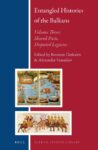
It is a well-known fact that the medieval history of the Balkan societies and states was largely shaped in and by their relations with Byzantium, the Eastern Roman Empire. As political entities they were formed on a territory that had for centuries been Byzantine provinces, and in time began to challenge the Empire’s political supremacy there, while the Byzantine cultural, political and institutional influence was extremely strong. Thus many aspects of the medi- eval past of the Greeks, the Bulgarians, the Serbs and the Romanians are the direct outcome of interactions between these peoples and Byzantium. In fact, most historians of the Balkans would maintain that their nations’ modern his- tory also bears, to a greater or lesser extent, the hallmark of these political and cultural entanglements.

The article sets off from a discussion of some methodological and theoretical issues pertinent to the study of ideological and institutional transfer between “centre” and “periphery” in nineteenth-century Europe. While taking into account the asymmetry in radiation and reception, it probes into the (Balkan) periphery’s political and cultural agency in reformulating and re-institutionalizing the “western model.” Rather than simply tracing movements, flows and circulation – the conventional concern of the transnational approach – the focus is on studying the transformations which occur in the process. This makes it possible to highlight the dynamics and versatility of idea- tional and institutional selection, interpretation, adaptation and transformation (or subversion) – in brief, the process of re-signification of ideas and institutions. The article then proceeds by exemplifying this approach in two directions. First, it examines several main channels and agents of transfer to and within the Balkan periphery illumi- native of the ways ideas, practices and institutions traveled and mutated in the course of their journey; second, it surveys several characteristic instances of transfer of liberal ideas and institutions in the Balkans focusing on their legitimization and “domestica- tion” which underscore the semantic and functional reinterpretations of modernity and tradition in the process.
This article takes a distance from the debate about ‘symbolic geographies’ and struc- tural definitions of historical spaces as well as from surveying discrete disciplinary traditions or political agendas of regionalist scholarship in and on Southeastern Europe. Its purpose instead has been two-fold. On the one hand, to bring to light a preexistent but largely suppressed and un-reflected tradition of regionalist scholarship with the hope that this could help us fine tune the way we conceptualize, contemplate and evaluate regionalism as politics and transnationalism as a scholarly project. In epistemological terms, on the other hand, it proposes a theoretical perspective to regionalist scholarship involving rigorous engagement with the scales of observation, and scale shifts, in the interpretation of history. The hypothesis the article seeks to test maintains that the national and the (meso)regional perspectives to history chart differentiated ‘spaces of experience’ — i.e. the same occurrences are reported and judged in a different manner on the different scales — by way of displacing the valency of past processes, events, actors, and institutions and creating divergent tem- poralities — different national and regional historical times. Different objects (i.e. spaces) of enquiry are therefore coextensive with different temporal layers, each of which demands a different methodological approach. Drawing on texts of regional scholars, in which the historical reality of the Balkans/Southeastern Europe is articu- lated explicitly or implicitly, the article discusses also the relationship between different spaces and scales at the backdrop of the Braudelian and the microhistorical perspectives.